 Skip to content

|
Key Takeaway: The air purifier vs air cleaner comparison comes down to how each system treats airborne contaminants. Some systems primarily capture particles through filtration, while others use technologies designed to reduce odors, allergens, bacteria, or other indoor air pollutants. |
Maintaining clean indoor air is important for comfort, airflow quality, and overall indoor air conditions. The air purifier vs air cleaner discussion often comes up when homeowners start looking for ways to reduce airborne contaminants such as dust, pollen, bacteria, odors, and pet dander.
While the terms are sometimes used interchangeably, air purifiers and air cleaners can operate differently depending on the technology involved. Some systems focus on trapping airborne particles through filtration, while others are designed to neutralize contaminants, odors, or microorganisms circulating through the air.
Understanding the differences between these systems can help homeowners choose the right indoor air quality solution for their HVAC setup and household needs. The best option often depends on the contaminants present, filtration goals, and the level of air treatment required.
Air Purifier vs Air Cleaner for Homeowners
Here is some basic information about air cleaners and air purifiers:
What is an Air Purifier?
An air purifier is a device that uses physical filters to remove particulates from the air. The device works by sucking in contaminated air and passing it through one or more filters that trap the dirt, pollen, smoke, or other allergens before releasing fresh, clean air into the room.
Some air purifiers also use UV light to sanitize the air, maintaining a clean and safe indoor environment. Others will also feature carbon filters that allow them to get rid of pollutants and bad odor.
Some common types of air purifiers include ozone generators, mechanical filters, activated carbon filters, and electronic air purifiers.
What is an Air Cleaner?
An air cleaner is any device that removes contaminants from the indoor air. These contaminants include dust, pollen, smoke, mold spores, and pet dander. Air cleaners can also help to eliminate bad odors.
In other words, even an air purifier falls under the air cleaner category. And even the air filter in your AC system is also an air cleaner. This means that any device that helps clean the air by filtering or sanitizing airborne pollutants, including dust, pollen, bacteria, and other toxic elements, is an air cleaner.
What is the Difference Between Air Cleaner and Air Purifier Units?
According to the AAFA (Asthma and Allergy Foundation of America), these two terms are almost synonymous. They refer to devices used to reduce or eliminate indoor pollution by trapping or destroying small airborne particles that cause discomfort, irritation, and even sickness. As such, the organization refers to air cleaners as air sanitizers or air purifiers.
Typically, the line differentiating air cleaner vs air purifier units is quite slim. Even the EPA (the United States Environmental Protection Agency) uses the above definition to define the two appliances.
Air Filter vs Air Purifier: Are they Different?
Yes. These are two different devices.
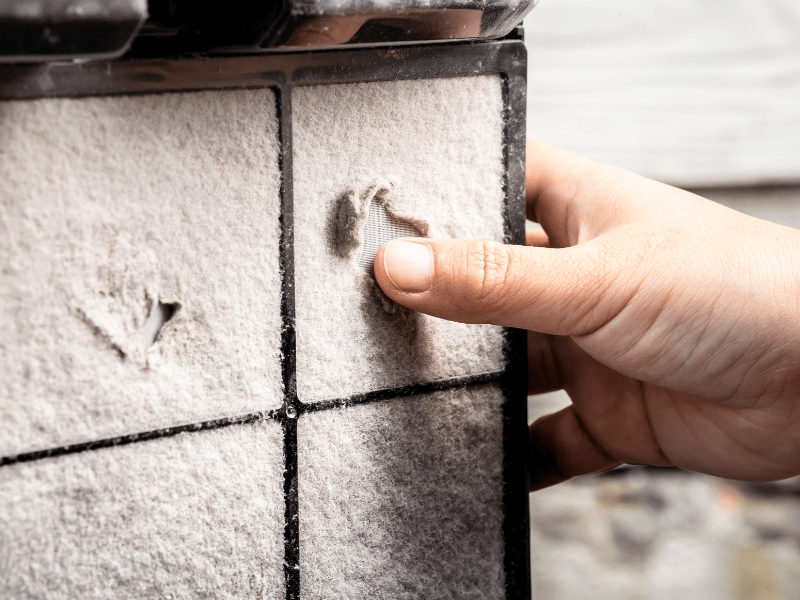
An air filter is a component of your HVAC system or an air cleaner. It helps to clean the air before it circulates in your house. Usually, there are one or more air filters in an air cleaner system, which also come in different sizes and quality levels. For instance, a high-quality air filter can last for about six before replacement.
On the other hand, an air purifier is a standalone device that you can use in your house independently. It doesn’t need to be connected to another appliance or system to work. You can either choose a portable air purifier or one that you can permanently install in your house.
Air purifiers use air filters to purify indoor air, although some will also use UV lights and carbon filters. The filters in an air purifier can be replaced, but the replacement frequency depends on the quality of the filter as well as the level of indoor pollution.
Electronic Air Cleaner vs Air Purifier: What’s the Difference?
These two appliances work to clean the indoor air. However, their mode of operation is somewhat different.
For example, an electronic is designed to clean the indoor air of pollutants like dust, pollen, far, and other debris. In essence, it filters away particles, large and small, from your indoor air.
On the other hand, an air purifier is designed to purify the air from contaminants, including viruses, mold, bacteria, and other toxic chemicals. As such, an air purifier not only filters the air but also sanitizes it using UV lights or ozone generators.
This means that while the electronic air filter can get rid of air pollutants, it doesn’t sanitize it from harmful and toxic ones. So, it protects you from contaminants that cause allergies. The air purifier, in contrast, protects your household from contaminants that can cause serious health issues.
Why do you Need an Air Purifier or an Air Cleaner?
The quality of indoor air can be two to five times worse than the quality of outdoor air, according to the EPA. Indoor air pollution is caused by a variety of sources, including:
- Volatile organic compounds (VOCs) from cleaning products, paint, and other household chemicals
- Mold and mildew from dampness or water leaks
- Dust mites
- Cigarette smoke
- Radon gas
All these pollutants can cause a variety of health issues like headaches, dizziness, nausea, fatigue, bronchitis, and even cancer.
An air cleaning device can help to eliminate these contaminants from your indoor air and improve the quality of the air you breathe. It’s especially important for people with allergies, asthma, and other respiratory conditions.
Air Purifier vs Air Cleaner — Which One is Best?
The answer to this question depends on your needs. While all of them are air cleaners, an air purifier might go a step further to sanitize your indoor air.
For example, while an electronic air cleaner filters particles like dust, pollen, or far that pollute your indoors, an air purifier gets rid of even the more harmful elements like bacteria and toxic gases.
So, if you’re looking to remove contaminants that cause allergies and respiratory problems, then an air purifier is a better choice. On the other hand, if you’re just looking to remove dust, pollen, and other large particles from your indoor air, then a simple air cleaner will suffice.
The ultimate goal is to improve the quality of your indoor air, whether it’s for your health or comfort. So, understand your environment first before purchasing an air cleaner device. Better still, you can seek the advice of a qualified HVAC technician.