 Skip to content

|
Key Takeaway: An air filter wet inside an HVAC system usually indicates moisture problems such as clogged condensate drain lines, frozen evaporator coils, or high indoor humidity. Addressing the source of moisture helps prevent airflow restrictions, mold growth, and reduced HVAC performance. |
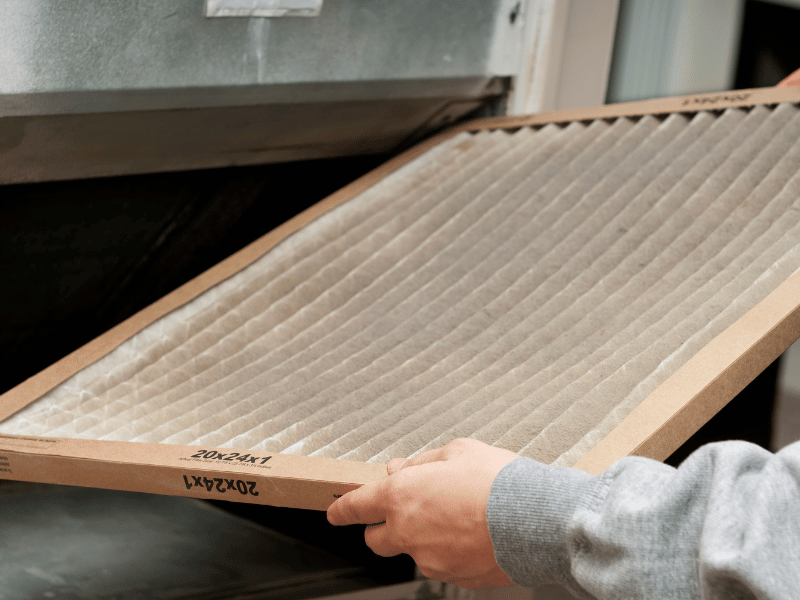
The air filter in your HVAC system plays an important role in maintaining indoor air quality and system performance. But when you discover an air filter wet inside your HVAC system, it can signal underlying moisture or airflow issues that need attention.
Air filters normally trap dust, pollen, mold spores, pet dander, and other airborne particles before they circulate through your home. However, when moisture enters the system, the filter can become damp and lose its effectiveness. A wet air filter may also indicate drainage problems, high humidity, or condensation issues within the HVAC system.
Moisture buildup in an HVAC system is not something homeowners should ignore. Just as regular filter replacement keeps the system clean, keeping the filter dry is equally important for maintaining proper airflow and indoor air quality.
So what causes an air filter to become wet? And what problems can it create for your HVAC system?
Let’s take a closer look at the common reasons an air filter becomes wet and how to address the issue.
Top Causes of a Wet Air Filter
- Clogged Condensate Line
How does a clogged condensate line get your HVAC air filter wet? Many people will undoubtedly wonder. And this is how:
The condensate drain’s job is to get rid of the water formed during the heating and cooling process of your home. This water is usually collected on a drip pan, which then leads it to the drain line. If the drain line is clogged by dirt, debris, or other particles, this condensate backs up to the drain pan.
When the pan is full, the condensate will start to overflow, most likely drenching the air filter. You might also notice a wet floor under the unit as the overflowing water leaks out.
Other signs of a clogged condensate drain will include elevated indoor humidity levels, zero water flowing out of your outdoor drain line, and leaking water. Your air conditioner will also shut down because of the clogging and water leaks.
- Dirty Air Filter
A dirty air filter can easily lead to a wet air filter. For starters, when you have dirty or clogged air filters, there is insufficient flow of air in the system.
As a result, there is not enough air reaching the evaporator coils, which leads them to freeze. If nothing is done fast, the ice on the coils will start to melt and fill the drip pan. And if the pan gets full and overflows, the result will be a soaked air filter.
Therefore, keeping the air filters clean is one way of preventing a wet air filter. Sounds complicated, right? Well, as the saying goes, what goes around comes around.
- Air Filter not Installed Correctly
Sometimes, you might notice water dripping from your AC unit. And this could be a result of the air filter not being installed correctly.
If the air filter is not placed snugly in its slot, there will be gaps through which air can escape. And when this happens, humid air from outside sneaks in and condenses on the cold evaporator coils. This water can eventually fall on the air filter, making it wet.
In this case, before opting to replace the air filter, ensure that it’s correctly installed. It might not be necessary to change the air filter at that point.
- A Faulty Condenser
When the compressor (condenser) malfunctions or is faulty, this might be the cause of your wet air filter problems. A faulty condenser means that the moisture in the air is not condensed completely. And as a result, wet air finds its way to the air filter.
Generally, your unit’s condenser will fail because of several reasons, including;
- Inadequate lubrication
- Insufficient power supply
- Overheating
Repairing a faulty compressor isn’t an easy task and, in most cases, not a DIY project. Therefore, make a point of contacting a professional HVAC technician to do it for you. It might cost you some money, but the risk of doing it yourself might become too expensive.
- A Leaky Drain Pan
Just like the clogged condensate drain line, a leaky drain pan can also cause a wet air filter. The drip pan is usually placed under the evaporator coils to collect water that drips from them.
But if this pan starts leaking, all the water it has collected will start dripping on the air filter, making it wet. Usually, a leaky drain pan is caused by cracks resulting from old age or rust.
A professional HVAC technician can help you fix a leaky drain pan and avoid further damage to your system.
How to Prevent Wet Air Filter Problems From Occurring
Why is my air conditioner filter wet? By now, you know the answers to this question. But how do you prevent it from happening to you?
Firstly, you need to ensure that you replace the air filter as many times as required. Replacing the filter regularly ensures that it stays not only clean but also dry.
Secondly, when you replace the air filters, ensure you use high-quality ones. You can do this by consulting with an HVAC expert before buying the air filter. Quality air filters will ensure that it doesn’t soak up too fast, even when faced with moisture conditions.
Lastly, regular maintenance of the HVAC system is crucial. When you maintain the system, you get to detect and correct any issues that might cause a wet air filter as early as possible. You can do this by checking the system regularly or hiring an HVAC expert to check it for you.
When you follow these tips, you’ll never need to ask the question “why is my AC filter wet?” again.
Can a Wet Filter Break Your AC Unit?
If your air conditioner filter is wet and you fail to replace it fast, this is a remedy for a broken-down AC unit.
Generally, getting an HVAC filter wet can cause your evaporator coils to freeze. And when this happens, your AC will have to work harder to produce the same results. As the unit overworks, several things can go wrong, including overheating or failure of some parts.
This will eventually cause your unit to break down, which means it can’t cool or heat your house anymore. Therefore, if you were wondering what would happen if you continue running your AC unit with a wet filter, the consequences are dire.